Foot Physiotherapist Sydney
Feel pain in your heel, arch, ankle, knee, hip or lower back? The cause is not always where the pain shows up
At Eastwest Physiotherapy, we look at how your feet affect the rest of your body. Your foot position can change how your knees rotate, how your pelvis loads, and how much strain your back, shoulders and neck have to absorb.
A small change under the foot can make a meaningful difference higher up the body, which is why our thorough assessment looks beyond the painful area and measures how your feet, legs, pelvis and spine work together under load.
Start with Gavin’s video to the right. You will see how the foot alignment process works, what we assess, and why orthotics are only one part of treatment. Alternatively, book your free 10-minute initial physio advice call and tell us about your injury. We’ll forge the path forward from here!
Free Foot Alignment Advice
Our 4-step Foot Alignment Process
Step 1: Postural & Gait Assessment
We start by looking at the whole system.
Your foot, ankle, knee, hip, pelvis and spine are assessed together. This helps us see whether your symptoms are being driven by local tissue irritation, poor load tolerance, foot position, leg length difference, or a combination of factors.
We may use gait analysis, pressure testing, postural checks, nerve and muscle testing, and imaging where needed. The aim is to map the pattern, not guess.
Step 2: Hands-on Body Work
Once we understand the pattern, we work on the tissues that are holding strain.
This may include myofascial release, joint mobilisation, soft tissue work, acupuncture, or other manual therapy, depending on your presentation.
The body often adapts around pain. Muscles tighten. Fascia becomes less mobile. Joints lose range Before we position the body to hold a new position, we need to help it move better.
Step 3: Weight-bearing Casting & Custom Orthotics
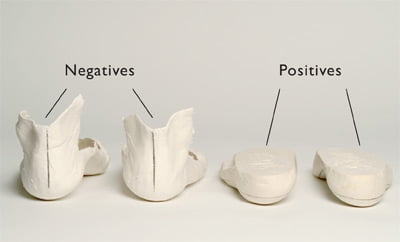
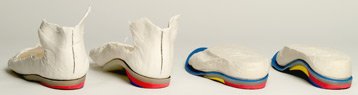
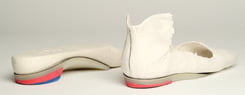
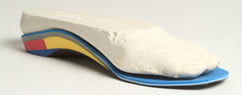
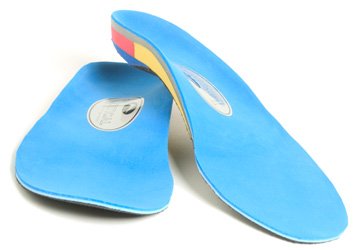
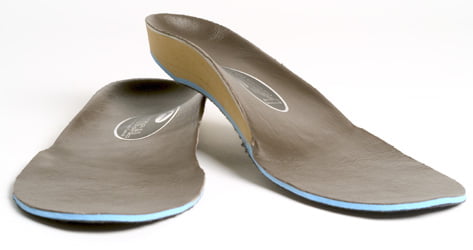
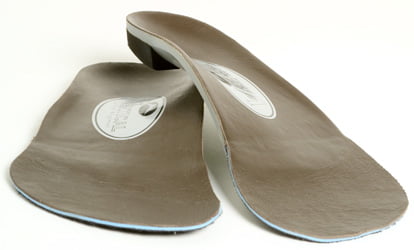
This is a key difference in the EastWest process. We use a weight-bearing casting method based on Neil Smith’s patented Foot Alignment System. Your feet are cast while your body is loaded, so we can assess how correction affects the foot, knee, hip and pelvis in real time.
This is different from a non-weight-bearing cast or a flat pressure mat alone. The orthotic is designed to do one or both of the following:
- Support tissues that are being overloaded
- Change how force travels through the foot and lower limb
Each orthotic is made for your body, posture, and symptoms.
Step 4: Loading & Strength Program
Orthotics can help change alignment and reduce load, but they are not the whole treatment.
Pain often develops when tissue load exceeds tissue capacity, which can occur in fascia, tendons, cartilage, muscle, or nerve tissue.
A loading program helps build capacity again. Depending on your condition, this may include calf strength, foot control, balance work, hip strengthening, tendon loading, mobility exercises, or a return-to-running plan.
The aim is to help your body tolerate more load with less irritation.
Foot Conditions We Treat
Foot pain rarely happens in isolation. Your foot has to absorb load, adapt to the ground, control balance, and help transfer force up through the ankle, knee, hip, pelvis and spine.
When one part of that system stops doing its job well, another area often takes more strain.
That’s why our foot alignment and orthotic therapy process looks at the whole body. We assess how your feet load, how your legs move, how your pelvis responds, and how your tissues tolerate daily activity.
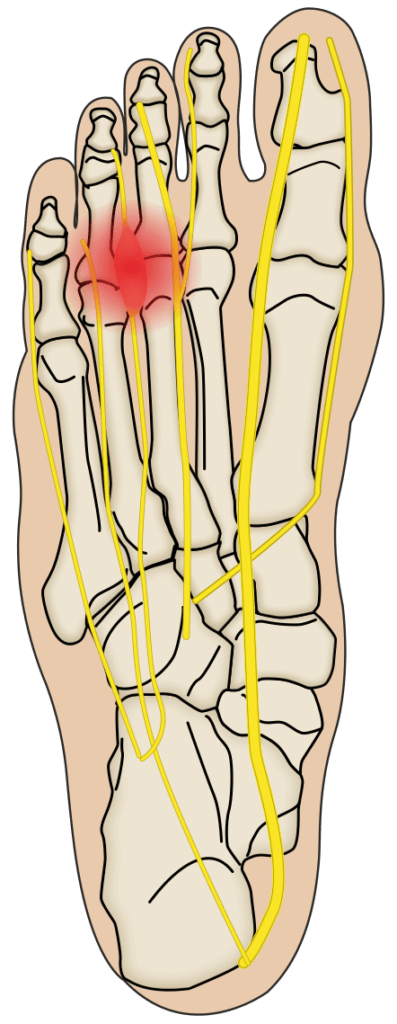
Morton’s neuroma can feel like burning, tingling, numbness or a sharp pain in the ball of the foot. Some people describe it as walking on a pebble, or feeling like the sock is bunched up under the toes.
It usually involves irritation or thickening around a nerve between the metatarsal bones. This can happen when the forefoot is compressed or overloaded.
Common causes and contributing factors:
- Excess pressure through the ball of the foot
- Tight footwear or narrow toe boxes
- High heels or shoes that shift weight forward
- A short first metatarsal or Morton’s Foot pattern
- Poor forefoot alignment
- Reduced big toe loading
- Over-pronation
- Repetitive walking, running or court sports
- Calf tightness
- Loss of foot strength or control
How we assess it:
We assess where pressure is building in the forefoot and how your toes, arches and metatarsals are loading.
This may include gait analysis, pressure assessment, postural checks and hands-on testing of the foot, ankle and calf. We also consider whether your walking pattern is placing excessive pressure on the smaller metatarsals.
Our approach:
Treatment focuses on reducing nerve irritation and offloading the painful area. This may include custom orthotics with domes or metatarsal support, myofascial release, joint mobilisation, footwear changes, cold laser therapy, shockwave therapy and a tailored home program.
The aim is to create more space and better load distribution through the forefoot, so the irritated nerve is not repeatedly compressed.
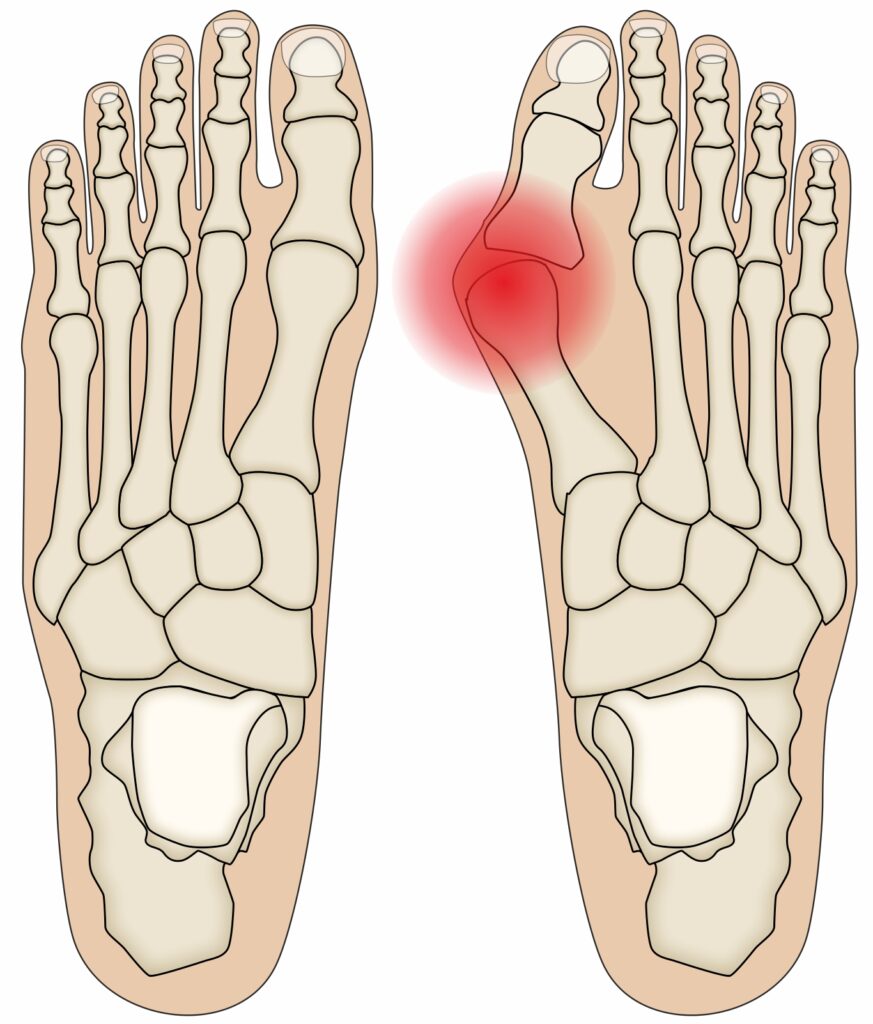
A bunion can make the big toe joint sore, stiff or swollen. Shoes may rub against the side of the joint, and walking may become uncomfortable when the big toe can no longer push off properly.
Bunions develop when the big toe drifts towards the smaller toes, and the joint at the base of the toe becomes more prominent. Over time, this can change how the foot loads and how the body balances.
Common causes and contributing factors:
- Family history
- Poor foot mechanics
- Over-pronation
- Footwear that narrows at the toes
- Reduced big toe mobility
- Weakness in the small foot muscles
- Increased pressure through the inside of the foot
- Arthritis or joint irritation
- Compensation from the hip, knee or pelvic position
How we assess it:
We assess the big toe joint, foot posture, arch behaviour and weight transfer during walking.
We also look at whether your foot alignment is changing how the knee and hip load. A bunion is often treated as a local toe problem, but it can affect balance, gait and push-off through the whole lower limb.
Our approach:
Treatment aims to reduce pain, improve foot function and slow further irritation where possible. This may include custom orthotics, footwear advice, toe mobility exercises, strengthening, night splints, myofascial release, massage, acupuncture or cold laser therapy.
Orthotics may help improve alignment and reduce pressure through the big toe joint. Exercises help maintain mobility, strength and control. If symptoms are severe or conservative care is not enough, surgery may need to be discussed with the right medical provider.
That sharp heel pain when you first step out of bed can be frustrating. It may ease after a few minutes, then return after standing, walking, running or wearing less supportive shoes.
Plantar Fasciitis affects the thick band of connective tissue under the foot. This tissue helps support the arch and absorb load. When it is stretched, compressed or overloaded for too long, it can become painful and slow to settle.
Some people feel pain directly under the heel. Others feel burning, aching or pulling through the arch.
Common causes and contributing factors:
- Poor foot alignment or over-pronation
- Sudden increases in walking, running or standing
- Tight calf muscles
- Weakness in the foot, calf or hip
- Flat feet or high arches
- Poor footwear
- Reduced big toe mobility
- Weight gain or pregnancy
- Hard surfaces at work or during exercise
- Reduced tissue load tolerance after rest or injury
How we assess it:
We look at how your foot behaves under load. That means checking your arch, heel position, ankle movement, calf strength, big-toe mobility, and gait pattern.
We also assess whether your foot mechanics are affecting your knee, hip or pelvis. This helps us see whether the heel is the main issue, or whether the plantar fascia is being overloaded by a broader alignment pattern.
Our approach:
Treatment may include myofascial release, calf and foot mobility work, strapping, footwear advice, orthotic therapy, shockwave therapy, cold laser therapy or acupuncture.
Orthotics may be used to support the arch and reduce strain on the plantar fascia. But they are not used on their own. We also build a loading program to improve the foot and calf’s ability to tolerate pressure over time.
The goal is to reduce pain, improve load distribution, and increase tissue resilience.
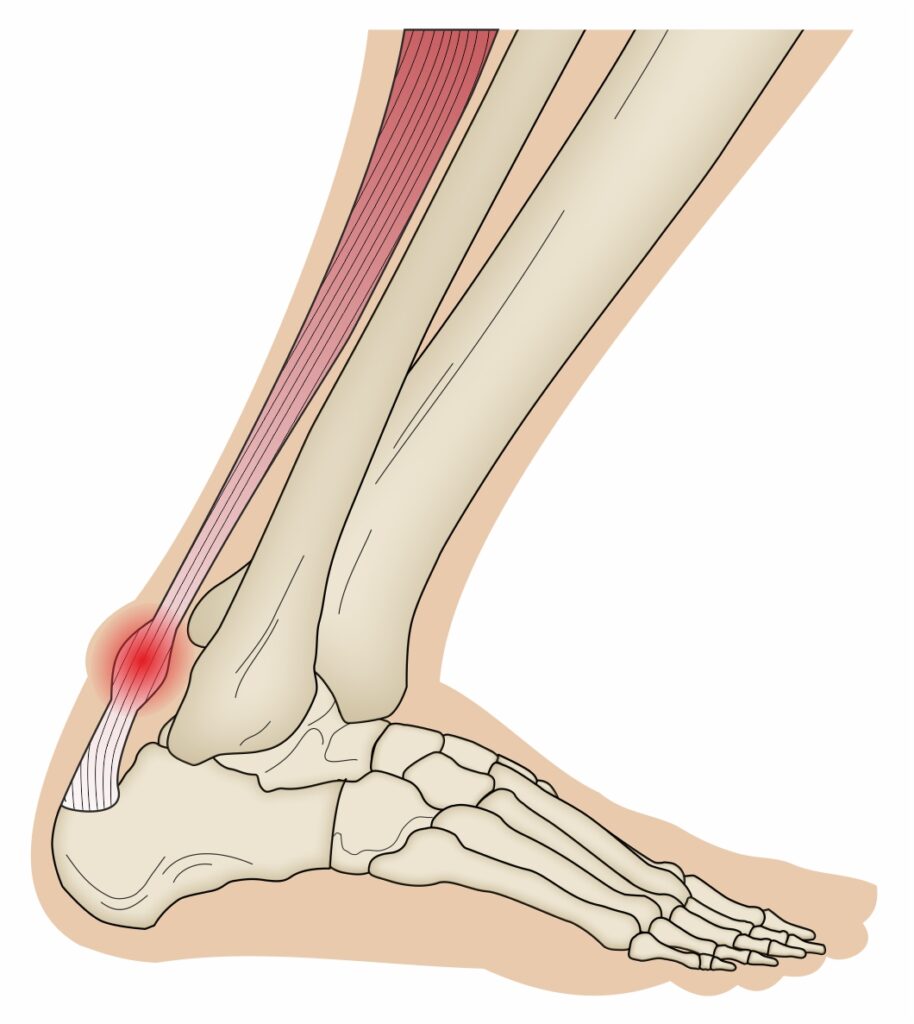
Achilles pain often feels like stiffness, aching or sharp pain at the back of the heel or lower calf. It may be worse first thing in the morning, while running, after sport, or when walking uphill.
The Achilles tendon stores and releases force every time you walk, run or jump. When the tendon is asked to do more than it can tolerate, it can become painful.
Common causes and contributing factors:
- Sudden increases in running or walking load
- Hill running or speed work
- Calf weakness
- Tight calf muscles
- Poor foot alignment
- Over-pronation
- Limited ankle mobility
- Footwear changes
- Reduced recovery between training sessions
- Tendon overload after time off from activity
- Changes in running technique
- Leg length difference or pelvic compensation
How we assess it:
We look at the tendon, calf, foot posture, ankle mobility and gait pattern. Advanced video treadmill analysis may be used to assess stride length, foot position, loading pattern and muscle control. This helps us identify why the Achilles is being overloaded, rather than only treating the painful spot.
Our approach:
Early treatment may focus on pain relief and reducing strain. This may include heel raises, taping, load management, myofascial release, acupuncture, shockwave therapy or orthotics.
Long-term improvement usually needs tendon loading. A staged program may include:
- Isometric holds to settle pain and begin loading
- Slow strength exercises to build tendon capacity
- Higher-speed loading when the tendon is ready
- Return-to-running or return-to-sport planning
Orthotics may be used when foot alignment increases tendon load. The loading program helps the tendon become stronger and more tolerant over time.
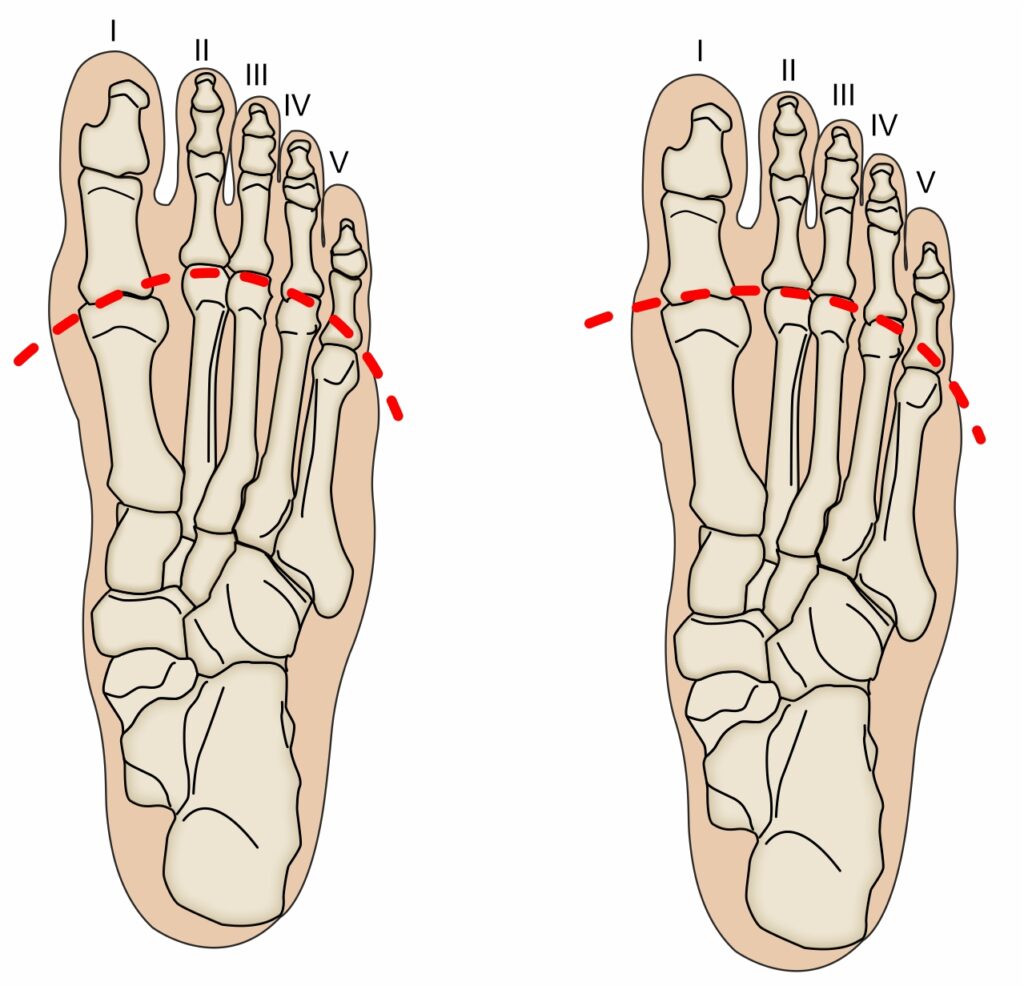
Morton’s Foot occurs when the first metatarsal is shorter than the second. This can shift load away from the big toe and onto the smaller metatarsals.
You may notice pressure under the ball of the foot, callus under the second toe, balance issues, or pain through the shin, outside of the foot, knee, hip or lower back.
Common causes and contributing factors:
- Short first metatarsal structure
- Reduced big toe loading
- Excess pressure through the second metatarsal
- Forefoot instability
- Out-toeing when walking or standing
- Poor balance on one leg
- Compensation through the knee, hip and pelvis
- Increased strain through the calf and lateral foot
How we assess it:
We assess the length and loading pattern of the metatarsals, how weight transfers through the forefoot, and whether the big toe is doing enough work during push-off.
We also check balance, gait, calf function and postural control. This helps us see whether the foot structure is contributing to pain higher up the chain.
Our approach:
Treatment may include custom orthotics, wedges, forefoot support, myofascial release and strength work.
The orthotic aims to redistribute pressure through the forefoot and improve how the body loads through walking or running. Exercises may focus on balance, foot control, calf strength and hip stability.
Foot arthritis can cause stiffness, swelling, aching, reduced movement and pain during walking. It may affect the big toe, the midfoot, the ankle, or the smaller joints of the foot.
When a joint becomes painful or stiff, the body often changes its movement. That can create extra pressure in nearby joints, tendons, fascia or muscles.
Common causes and contributing factors:
- Osteoarthritis
- Rheumatoid arthritis
- Gout or inflammatory joint conditions
- Previous injury or fracture
- Repetitive load over time
- Poor foot alignment
- Reduced joint mobility
- Weakness in the foot, calf or hip
- Footwear that increases pressure
- Compensation from knee, hip or pelvic mechanics
How we assess it:
We assess joint mobility, swelling, pain location, gait, foot posture and load tolerance. We may also look at imaging if it is available or needed. The aim is to understand which joints are irritated and how your movement pattern is affecting them.
Our approach:
Treatment focuses on reducing pressure, maintaining movement and improving load distribution. This may include joint mobilisation, myofascial release, orthotics, footwear advice, stretching, strengthening and activity modification.
Orthotics may help support painful joints and reduce excessive pressure. Exercises help maintain mobility and strength so the foot can keep working as well as possible.
A leg length difference can affect how your pelvis, hips, knees and feet load. Some people adapt well and have no pain. Others develop symptoms over time, especially when the difference changes how they stand, walk or run.
Pain may appear in the lower back, sacroiliac joint, hip, knee, foot or ankle.
Common causes and contributing factors:
- Natural structural difference
- Growth differences during childhood or adolescence
- Previous fracture
- Hip or knee surgery
- Pelvic rotation or spinal compensation
- Muscle tightness or imbalance
- Scoliosis or postural changes
- Functional compensation from pain or injury
How we assess it:
We assess whether the difference appears structural, functional, or part of a broader compensation pattern. This may include postural assessment, gait analysis, pelvic checks, leg-length scanning, and imaging where appropriate. A small difference does not always require correction, so the key is to understand whether it is clinically relevant to your symptoms.
Our approach:
Treatment may include custom orthotics, heel lifts, myofascial release, postural work and strengthening. The goal is to improve alignment and reduce uneven strain through the pelvis and lower limb.
We also look at how the body has adapted to the difference. If muscles, fascia or joints have been compensating for years, they often need treatment and retraining as well.
Running places repeated loads on the foot, ankle, knee, hip, and spine. Each step can create forces much higher than body weight. When your training load, foot posture, muscle strength or recovery does not match what your body can tolerate, pain can build.
Running injuries can present as heel pain, Achilles pain, shin splints, knee pain, hip pain, forefoot pain, or lower back pain.
Common causes and contributing factors:
- Sudden increases in distance or intensity
- Poor recovery between sessions
- Weak calf, foot or hip muscles
- Poor foot alignment
- Over-pronation
- Limited ankle mobility
- Reduced hip control
- Training on hard or uneven surfaces
- Unsuitable footwear
- Running technique issues
- Previous injury or time away from running
How we assess it:
We look at your gait, foot strike, stride length, lower limb control and training history. We also assess strength, mobility, tissue irritability and foot alignment. The aim is to determine whether the issue is mainly load, alignment, or strength-related, or a mix of all three.
Our approach:
Treatment may include myofascial release, gait retraining, custom orthotics, mobility work, strengthening and a graded return-to-running program. Orthotics can help improve alignment and reduce repeated strain. Strength and loading work help your body tolerate the demands of running again.
The goal is not just to stop pain. It is to help you return to running with a better understanding of your body’s limits and capacity.
Shin splints usually cause pain along the inside edge of the shin. It often starts during running, walking, or other physical activity, then may ease as the muscles warm up. Over time, it can become more persistent and affect everyday walking.
Shin splints are often linked to repeated traction and load through the muscles and fascia attaching to the shin bone.
Common causes and contributing factors:
- Sudden increase in running or walking
- Hard training surfaces
- Poor footwear
- Over-pronation
- Tight calf muscles
- Weak calf, foot or hip muscles
- Poor load management
- Reduced ankle mobility
- Running technique issues
- Low tissue tolerance after time off exercise
How we assess it:
We assess the alignment of the shin, calf, and foot, gait pattern, footwear, and training load. We also check for signs that may suggest a stress fracture or another condition. Shin pain that is sharp, localised, worsening or painful at rest needs careful assessment.
Our approach:
Treatment may include load management, calf and foot strengthening, myofascial release, gait analysis, stretching, footwear advice and custom orthotics.
Orthotics may help reduce strain if the foot is rolling in and increasing traction through the shin.
A loading program helps build the lower leg’s capacity so symptoms do not return as soon as activity increases.
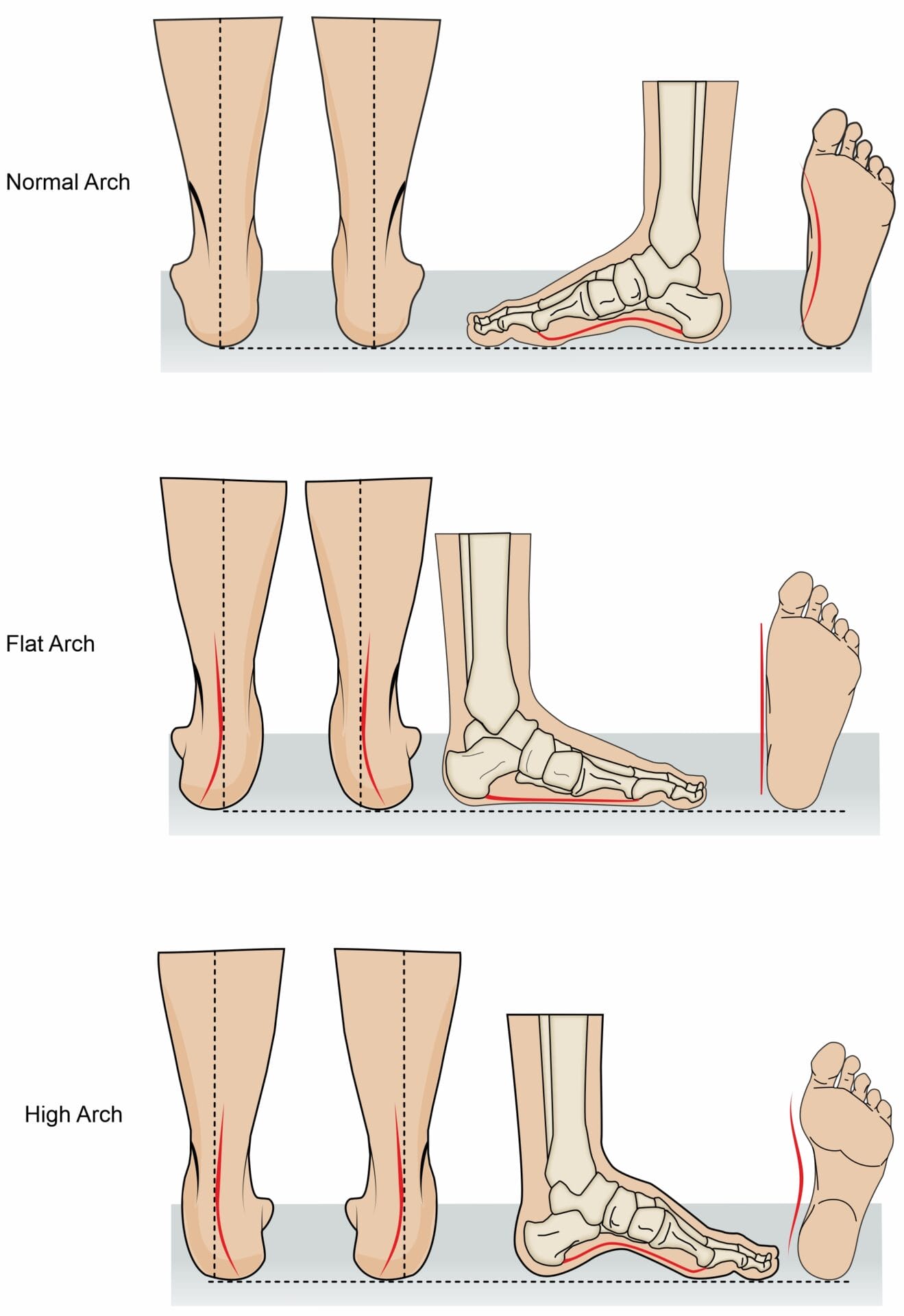
Flat feet or over-pronation occur when the arch drops and the foot rolls inward under load. This is not always painful. Many people have flat feet and function well.
Problems can develop when the foot rolls in more than the body can control, or when the movement increases stress through the ankle, shin, knee, hip or lower back.
Common causes and contributing factors:
- Genetics
- Weakness in the foot or calf
- Reduced arch control
- Pregnancy or weight gain
- Repeated impact on hard surfaces
- Poor footwear
- Hypermobility
- Previous injury
- Tendon changes
- Hip and pelvic control issues
How we assess it:
We assess how your arch behaves when standing, walking and moving. Static posture alone is not enough. We also need to see how the foot behaves dynamically and how that affects the knee, hip, pelvis and spine.
This may include gait analysis, pressure analysis, muscle testing and postural assessment.
Our approach:
Treatment may include custom orthotics, strengthening, balance work, gait retraining, footwear advice and myofascial release. Orthotics may support the arch and improve alignment from the ground up. Exercises help the foot and lower limb build better control.
The goal is not to create a “perfect arch”. It is to reduce strain and help the body load more comfortably.
Back pain can have many causes. In some people, poor foot mechanics or a leg-length difference can cause uneven forces through the pelvis and lower back.
You may notice pain after standing, walking, running or wearing certain shoes. You may also feel one-sided tightness through the hip, glute or lower back.
Common causes and contributing factors:
- Leg length difference
- Over-pronation
- Uneven weight-bearing
- Pelvic rotation or tilt
- Poor hip control
- Reduced foot stability
- Compensation after injury
- Long periods of standing
- Running or walking load
- Previous lower limb injuries
How we assess it:
We assess the feet, legs, pelvis and spine together. This may include leg-length scanning, gait analysis, postural assessment, muscle testing, and hands-on assessment of the lower back and hips. The key question is whether the back is the source of the problem or is reacting to an uneven load from below.
Our approach:
Treatment may include myofascial release, joint mobilisation, orthotics, leg-length correction, hip strengthening, spinal mobility work, and postural retraining. Orthotics may help when poor foot alignment is increasing pelvic or spinal strain.
The aim is to reduce repeated load through the back and improve how the whole body shares force.
Knee pain can be affected by how the foot and hip control movement. When the foot rolls inward, the shin can rotate. This may change how the knee tracks and increase strain through ligaments, cartilage, tendons or the kneecap.
Some people feel pain at the front of the knee. Others feel pain along the inside, outside or back of the joint.
Common causes and contributing factors:
- Over-pronation
- Poor knee tracking
- Weak hip or glute muscles
- Reduced foot control
- Flat feet
- Previous ankle or knee injury
- Running or jumping load
- Poor footwear
- Tight calf, hamstring or hip muscles
- Leg length difference
- Increased rotational force through the lower limb
How we assess it:
We assess the knee together with the foot, ankle, hip and pelvis. This may include gait analysis, squat assessment, single-leg balance testing, muscle testing, foot posture checks and weight-bearing casting where orthotics are appropriate. We want to understand what is driving the knee load, not just where the pain sits.
Our approach:
Treatment may include custom orthotics, myofascial release, strengthening, mobility work, gait retraining and load management. Orthotics may reduce excessive rotational force from the foot into the knee. Strength work helps the hip, thigh and calf control the joint more effectively.
The goal is to reduce irritation and improve how the knee handles daily movement, walking, stairs, and exercise.
Why Custom Orthotics Are Only Part Of The Answer
A generic orthotic can sometimes feel helpful. But if it does not match your movement pattern, it may not solve the real problem.
At EastWest Physiotherapy, orthotics are prescribed as part of a broader treatment plan. We want to know:
- What tissue is irritated?
- Why is it being overloaded?
- What does your foot do under load?
- How does your pelvis respond?
- What needs support?
- What needs strengthening?
- What needs mobility?
This is how orthotics become more than a shoe insert. They become one part of a plan to change load, improve alignment and help your body move with less strain.
Book An Appointment With Our Foot Physios In Sydney
If you are unsure whether your foot position is contributing to your pain, start by watching Gavin’s video at the top of this page. It explains the process in plain terms and shows why we look beyond the painful area.
If the approach feels relevant to your symptoms, book an appointment with EastWest Physiotherapy in Hunters Hill at 02 9817 1781 or book a free 10-minute physio advice call now. We will assess how your feet, legs, and posture work together, then talk you through the next practical step.