
Acupuncture Physiotherapy Sydney
Physiotherapy, acupuncture and needling for fascia, alignment & pain relief
Do you have recurring neck pain, headaches that build throughout the day, tight muscles, or chronic pain that has not responded the way you hoped with other treatments?
At EastWest Physiotherapy, acupuncture and dry needling are used to do more than relax a sore muscle. We use needling to help release restricted fascia, reduce protective muscle tension, calm irritated nerves, and improve how your body aligns and moves.
It is one part of a broader physiotherapy treatment plan that looks at why the tissue became overloaded in the first place.
If your body keeps pulling back into the same painful pattern, we look at the pattern, not just the painful point. Book your free 10-minute physio advice call and talk to one of our physios about what you’re experiencing. We can help determine the best treatment method for your needs.

When tension becomes a whole body problem
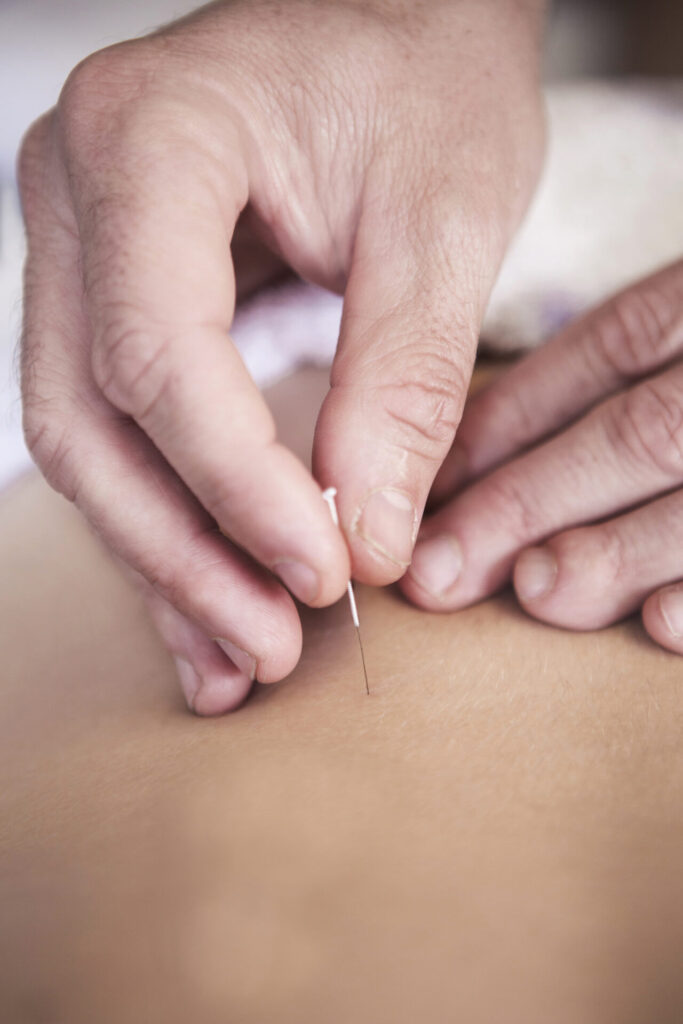
Muscle tightness is not always local. A stiff neck may be linked to tension through the shoulders, rib cage and spine. A painful hip may be affected by the lower back, the pelvis, and the position of the foot. A recurring headache may come from fascial tension, joint restriction, jaw clenching, postural load or nervous system irritation.
The body works as a connected system of muscles, fascia, joints, nerves and movement habits. When one area becomes restricted, another area often compensates. Over time, this can create:
- Neck pain
- Headaches or migraines
- Chronic pain
- Muscle tension
- Trigger points
- Restricted range of motion
- Postural tightness
- Sports injuries
- Shoulder, back, hip or jaw discomfort
- Pain that keeps returning after other treatments
- Tightness that feels deep or hard to stretch
- Symptoms linked with stress, posture or repetitive load
Needling can help when the body is holding onto tension that is difficult to release with stretching or massage alone.
How we use acupuncture in physiotherapy
Acupuncture in physiotherapy uses fine, sterile needles that are gently inserted into specific points on the body. At EastWest, those points are chosen with a clear purpose; we may use needling to:
- Release restricted fascia
- Reduce muscle guarding
- Calm trigger points
- Improve local blood flow
- Reduce irritation around sensitive tissues
- Support better joint movement
- Help the nervous system settle
- Improve comfort before movement retraining
- Support alignment through the spine, pelvis, shoulders or limbs
This is not a generic “needle where it hurts” approach. We assess how your body is holding tension, where movement is being restricted, and how that restriction may be affecting alignment. Then we use acupuncture, dry needling, manual therapy, massage and exercise rehabilitation together.
The aim is to create enough release for the body to move differently.
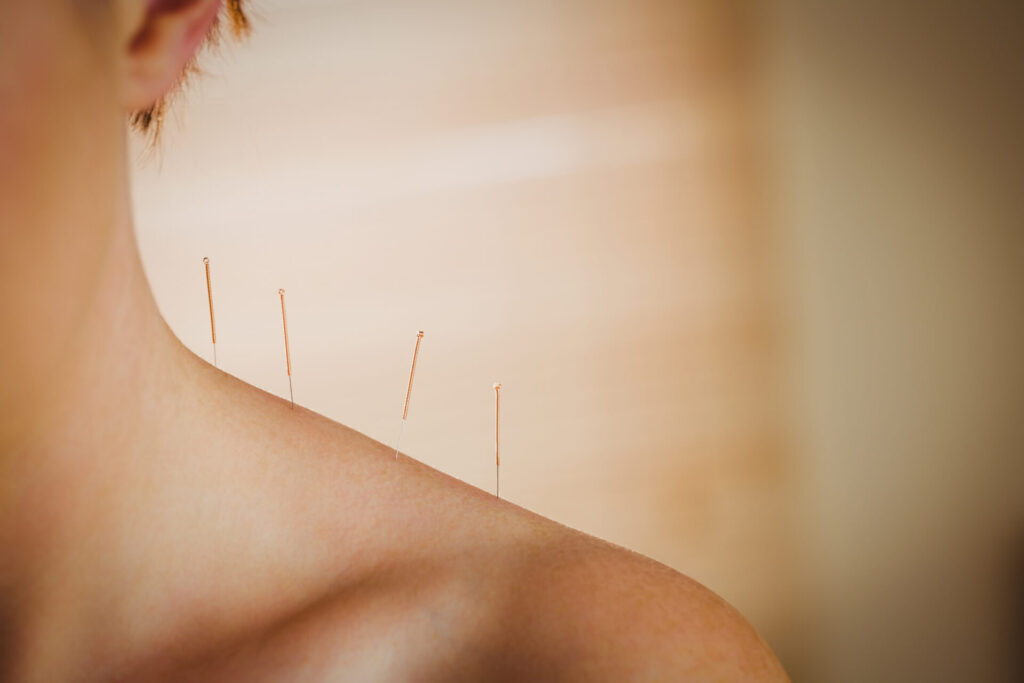
The fascia and alignment connection
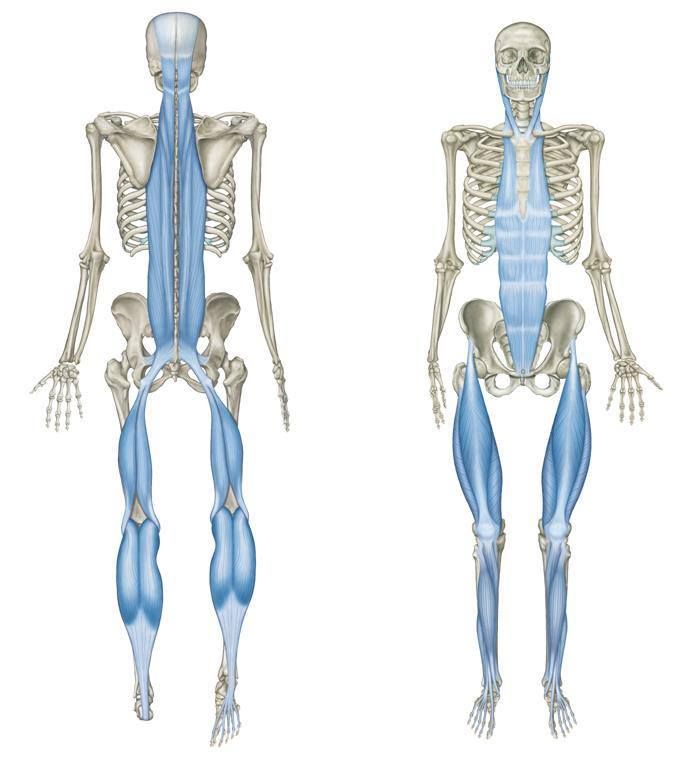
Fascia is the connective tissue that wraps through and around your muscles, joints, nerves and organs. It helps transfer force through the body.
When fascia becomes tight, dehydrated, irritated or overloaded, it can change how the body moves. You may feel this as a deep line of tightness, a pulling sensation, a recurring “knot”, or pain that seems to travel.
This is why our physios don’t just look at one sore spot. A restriction in the front of the hip can affect pelvic position. Tension through the chest and neck can contribute to headaches. Tightness in the calf, hamstring, or glutes can change how the lower back loads.
Needling can be used to stimulate specific points in these fascial lines. This can help reduce tissue tension and give the body a better chance of returning to a more balanced position.
The EastWest view of needling
EastWest Physiotherapy brings together two ways of understanding the body:
- Traditional Chinese medicine describes acupuncture points and meridians as pathways that influence balance, function and pain throughout the body.
- Western anatomy describes muscles, fascia, nerves, joints and the nervous system. It examines how tension, compression, and movement patterns affect pain and alignment.
These two models often overlap in useful ways. For example, a traditional meridian may follow a similar pathway to a myofascial line, a nerve pathway, or a chain of muscular tension. That gives us a practical way to select points relevant to both pain relief and movement correction.
This is where acupuncture and dry needling become more specific. We are not only trying to reduce symptoms: we are trying to change the tissue state so the body can move with less resistance.
Acupuncture and dry needling: how we use both
Clients often ask about the difference between acupuncture and dry needling. Both use fine, sterile needles—the difference is how the points are chosen and what we are trying to influence.
- Acupuncture is based on traditional Chinese medicine. It uses acupuncture points and meridians to support balance, pain relief and whole-body function.
- Dry needling is based more on Western anatomy. It usually targets trigger points, tight muscles and local areas of muscle dysfunction.
At EastWest, we may use either approach or a combination of both. For example:
- Acupuncture may be used to calm the nervous system and reduce widespread sensitivity
- Dry needling may be used to release a stubborn trigger point
- Fascial needling may be used along a line of tension that is affecting posture or movement
- Manual therapy may be used to improve joint motion after the tissue releases
- Exercise rehabilitation may be used to help the body hold the new alignment
The technique changes depending on the person, the condition and the assessment findings.
Our approach to treatment
Step 1: Assess the pattern, not just the pain
We start by looking at how your body is moving and compensating. Your assessment may include:
- Where the pain starts
- Where symptoms travel
- What movements increase or reduce pain
- Fascial tension patterns
- Trigger points
- Muscle guarding
- Joint mobility
- Nerve sensitivity
- Postural alignment
- Breathing patterns
- Strength and control
- Work, sport and lifestyle load
This helps us identify whether the pain is being driven by local tissue irritation, fascial restriction, joint stiffness, nerve irritation, postural load or a combination of factors.
Step 2: Release restricted fascia and muscle tension
If the body is guarded, tight or sensitive, we first aim to reduce that protective tone. Needling may be used alongside:
- Myofascial release
- Massage
- Manual therapy
- Joint mobilisation
- Breathing strategies
- Gentle mobility work
This stage can help reduce pain, soften tight muscles and improve the way tissues glide over each other.
The goal is not to force the body into a new position; it’s to remove the restrictions that are keeping it stuck.
Step 3: Restore alignment and movement
Once the tissue begins to release, we work on movement. This may involve improving the mobility of the neck, spine, shoulders, hips or pelvis. It may also involve correcting how the body holds itself during standing, walking, sitting, lifting or sport.
Needling can help create the window for change. Manual therapy and movement retraining help us make the most of that window.
Step 4: Retrain the body so the pattern doesn’t recur
Pain often returns when the body goes back to the same loading pattern, which is why treatment doesn’t stop once symptoms ease.
Your physiotherapist may prescribe targeted exercises to improve strength, mobility, breathing, posture or load tolerance. This helps your body hold better alignment and move with less strain.
The aim is long-term change, not just short-term relief.
Conditions acupuncture and needling may support
Acupuncture and dry needling may be used when your assessment shows that fascial tension, muscle guarding, trigger points or nervous system sensitivity are contributing to your pain.
Neck pain often builds when the neck, shoulders, upper back and jaw are holding too much tension. You may feel stiffness, aching, headaches, limited rotation, or tightness that returns after long hours at a desk.
Common contributing factors include:
- Upper back stiffness
- Jaw tension
- Shoulder guarding
- Poor breathing mechanics
- Stress-related bracing
- Repetitive desk posture
- Trigger points in the neck and shoulders
- Fascial tension through the chest, ribs and spine
Needling may be used to release trigger points, reduce muscle guarding and soften tension through the neck and shoulder fascia.
This can make it easier to restore neck movement and improve posture.
Some headaches are influenced by tension in the neck, jaw, shoulders and upper back. Patients may describe pain that starts at the base of the skull, pressure behind the eyes, tightness around the temples, or headaches that build throughout the day.
Common contributing factors include:
- Neck joint stiffness
- Tight suboccipital muscles
- Jaw clenching
- Shoulder tension
- Upper back restriction
- Stress-related muscle guarding
- Poor workstation setup
- Fascial tension through the head, neck and chest
Acupuncture may help calm the nervous system and reduce tension through relevant meridians, myofascial lines and trigger points.
Treatment may also include manual therapy, massage, joint mobilisation, breathing work and exercise rehabilitation.
Chronic pain can change how the nervous system responds to normal movement and pressure. You may feel pain that spreads, flares easily, or does not match the amount of activity you have done. The body may become protective, guarded and sensitive.
Common contributing factors include:
- Long-term tissue irritation
- Nervous system sensitivity
- Protective muscle tension
- Reduced movement confidence
- Poor sleep or stress load
- Previous injury
- Inflammation
- Weakness after avoiding movement
- Repeated flare-ups
Acupuncture may help reduce discomfort and calm the nervous system. But it is not used as a standalone fix. We combine it with education, gentle movement, pacing, manual therapy and targeted exercises to help rebuild tolerance over time.
Sports injuries often involve more than one overloaded tissue. A calf strain may be linked to hip control, foot alignment or training load. A shoulder injury may be linked to thoracic stiffness, neck tension or poor scapular control.
Common contributing factors include:
- Sudden training increases
- Repetitive loading
- Poor recovery
- Trigger points
- Fascial restriction
- Reduced mobility
- Strength imbalance
- Poor movement control
- Previous injury
Needling may help reduce muscle tension and improve tissue release around the affected area. Once the tissue settles, exercise rehabilitation helps rebuild strength, control and sport-specific function.
Back and hip pain often involve a connected pattern through the pelvis, glutes, hip flexors, hamstrings, spine and feet. You may feel one-sided tightness, deep aching, restricted movement, or pain that returns after sitting, standing or exercise.
Common contributing factors include:
- Hip flexor tightness
- Glute weakness or guarding
- Pelvic rotation
- Lower back joint stiffness
- Fascial restriction through the front or back body line
- Poor foot or leg alignment
- Repetitive lifting or sitting
- Reduced core and hip control
Needling may be used to release deep fascial tension and reduce muscle guarding around the pelvis and spine. Manual therapy and exercise then help restore alignment and load control.
What to expect during treatment
Your physiotherapist will explain the process before any needles are inserted. The needles are fine, sterile and single-use. They are gently inserted into selected acupuncture points, trigger points or areas of fascial tension.
During treatment, you may feel:
- A slight tingling
- A dull ache
- A gentle heaviness
- Warmth around the area
- A local twitch response
- A sense of softening or release
- A calmer feeling throughout the body
Some patients describe the feeling as unusual but comfortable. Others feel very little during insertion. The important thing is that you stay in control throughout the appointment. If any sensation feels too strong, your practitioner can adjust the technique or remove the needle.
Make an apppointment
If pain, tightness or recurring symptoms keep pulling your body out of balance, book a free 10-minute initial consultation with EastWest Physiotherapy. We will assess how your fascia, muscles, joints, nerves and movement patterns are working together, then explain whether acupuncture, dry needling or another treatment approach is right for you.
Call 02 9817 1781 or book online.
Have a question first? Contact the team, and we can help you decide whether acupuncture treatment is suitable for your symptoms.
